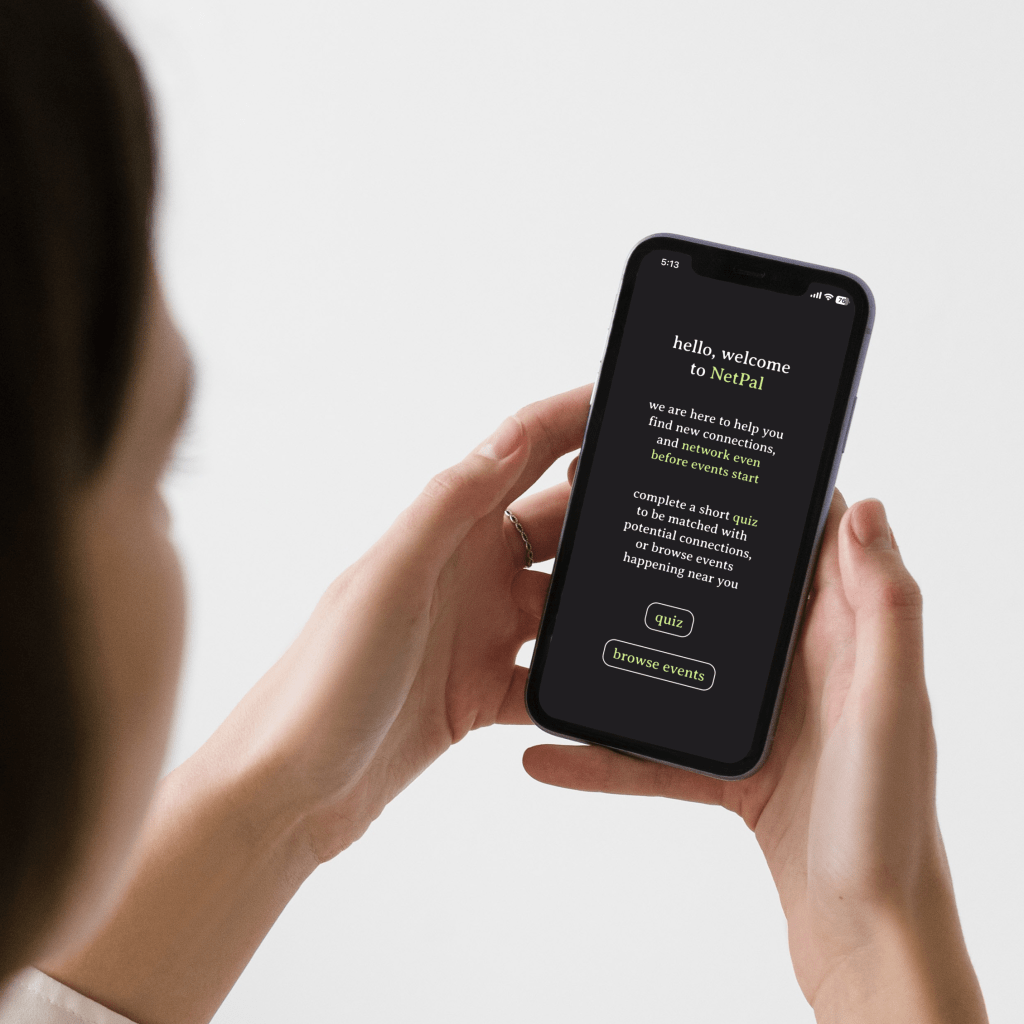
✦ A digital product to help young professionals network better and create genuine, long lasting connections

Product Conceptualisation, Research, Prototyping, Eyetracking, Continuous iteration

Research
Design & Development
User Testing: Eyetracking + RTA
  Iterative design process
Final Prototype & Conclusion
Background & Context
From personal experience and observation, professional networking can be daunting to the majority of students and young professionals entering the industry, especially with a lack of experience. I was driven to develop a solution that can help young professionals network better, with the goal of making genuine, long-lasting connections.
Project scoping
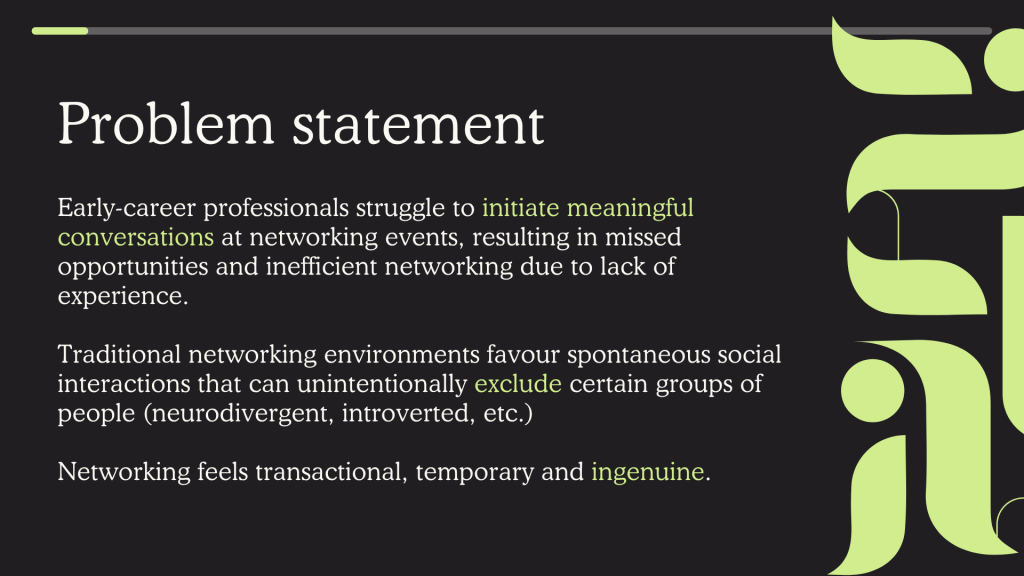
How might we…
| help users establish meaningful connections before they even arrive at networking events? |
| lessen the awkwardness and challenges of making a new professional connection? |
| reduce the anxiety associated with approaching strangers at professional events? |
| help users prepare for networking conversations in ways that enhance rather than replace the in-person experience? |

Research
A combined methodology of surveys and focus groups was conducted to gain more information on the target group, their behaviour and pain points. The survey gathered general behavioural data in a larger scale, whereas the focus groups allowed deeper understanding of users’ personal experiences, needs and pain points.
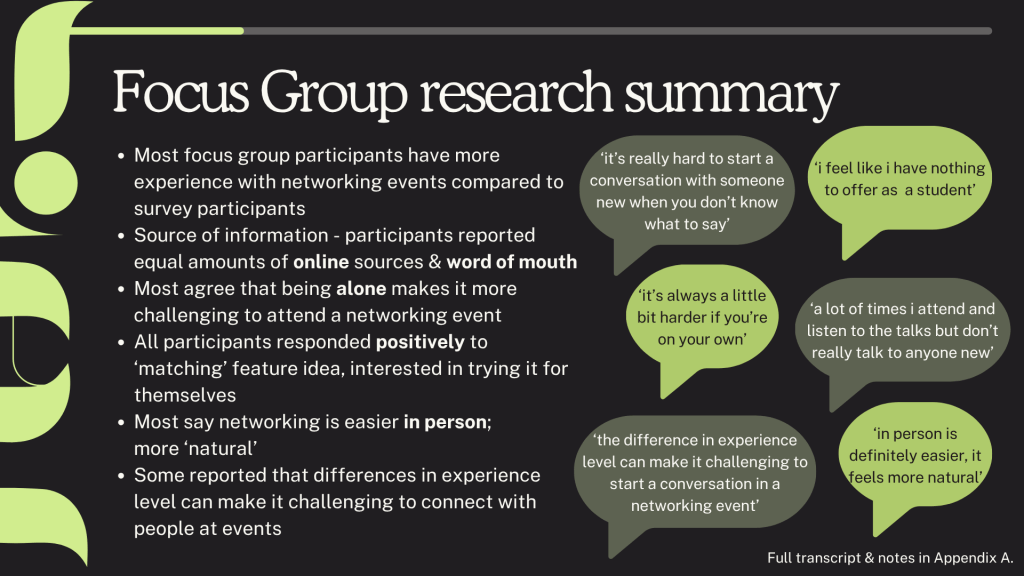
The semi-structured nature of focus groups allowed me to adapt my approach as a researcher according to past groups’ responses or new ideas as I progress.
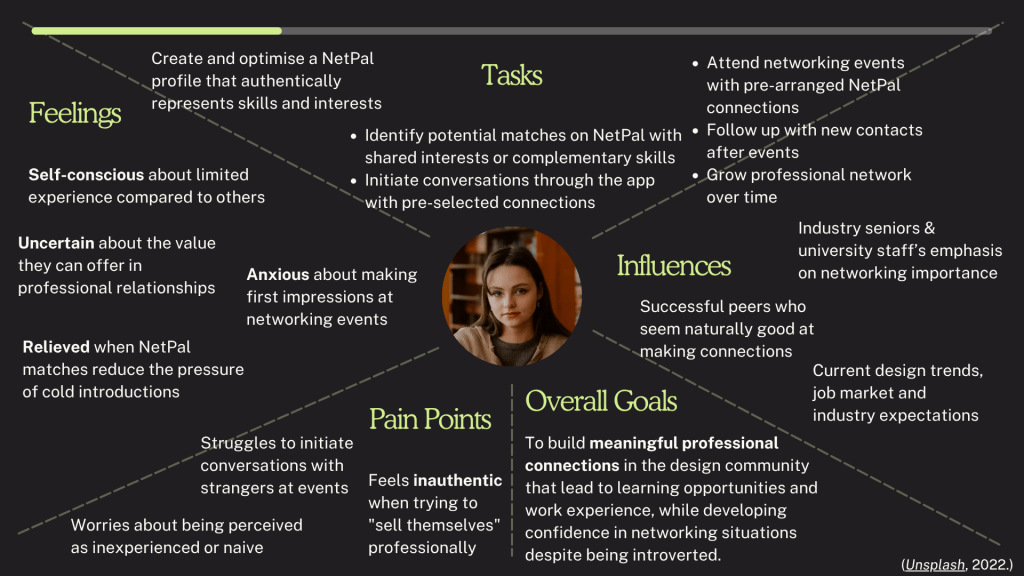
User Archetypes
Research findings showed that key barriers to networking include lack of experience and feeling intimidated when attending events, especially for students who feel like they don’t have enough experience.
Thanks to the user research, I had a clearer idea of the target users’ needs and pain points, which allowed me to narrow down and prioritise key design requirements in this stage of the product.
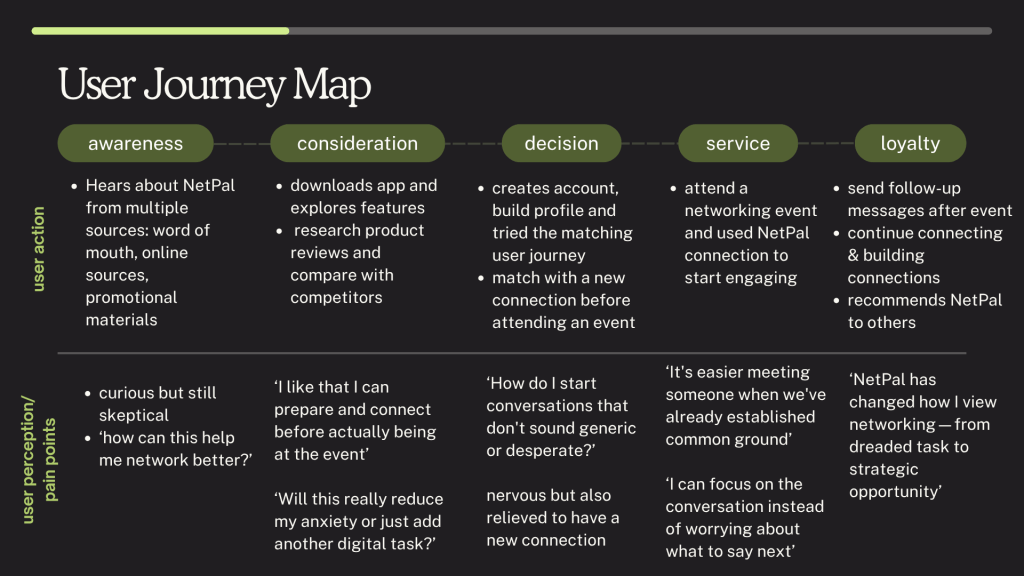
Design & Development
Brand identity, market positioning & tone of voice
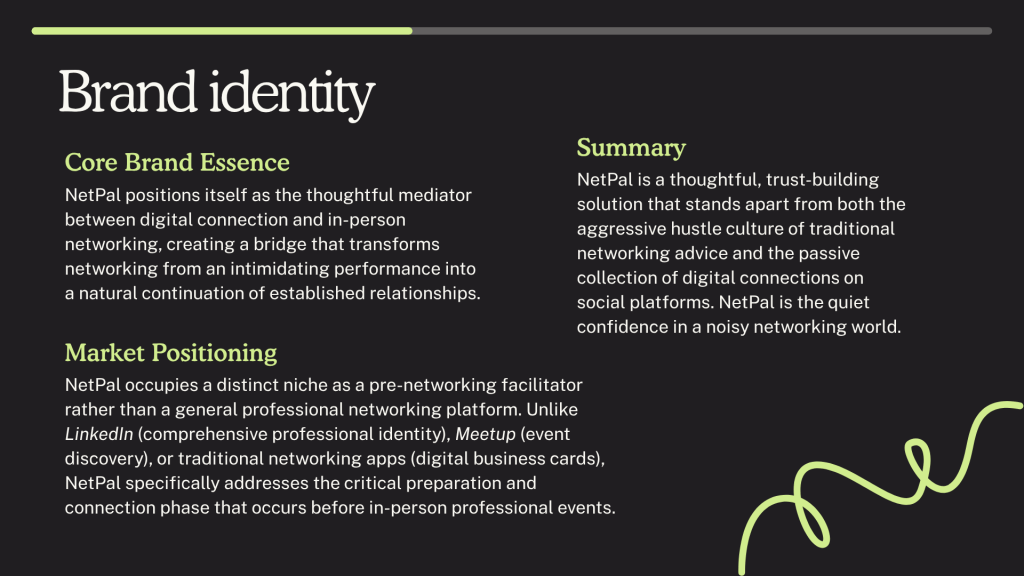
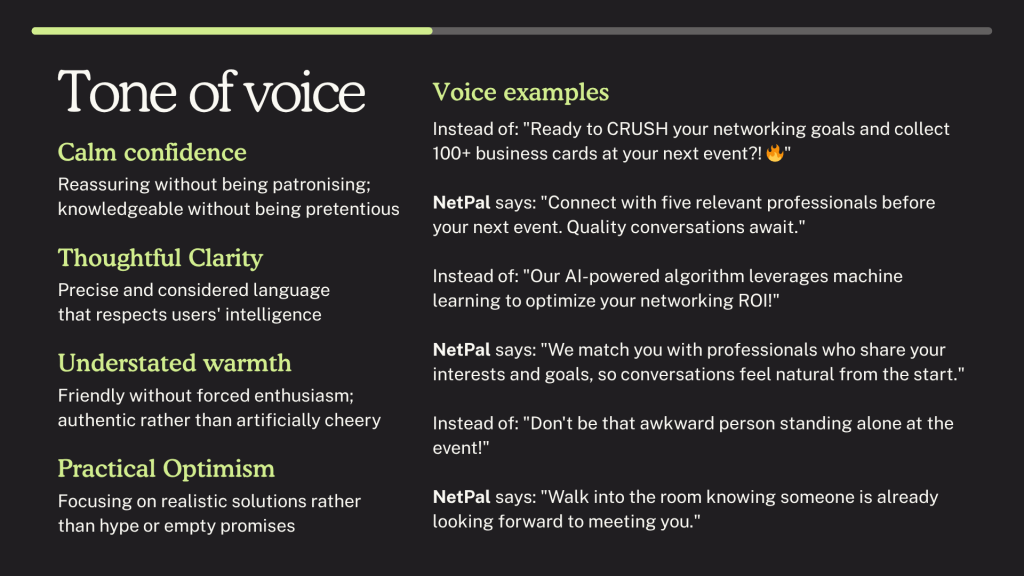
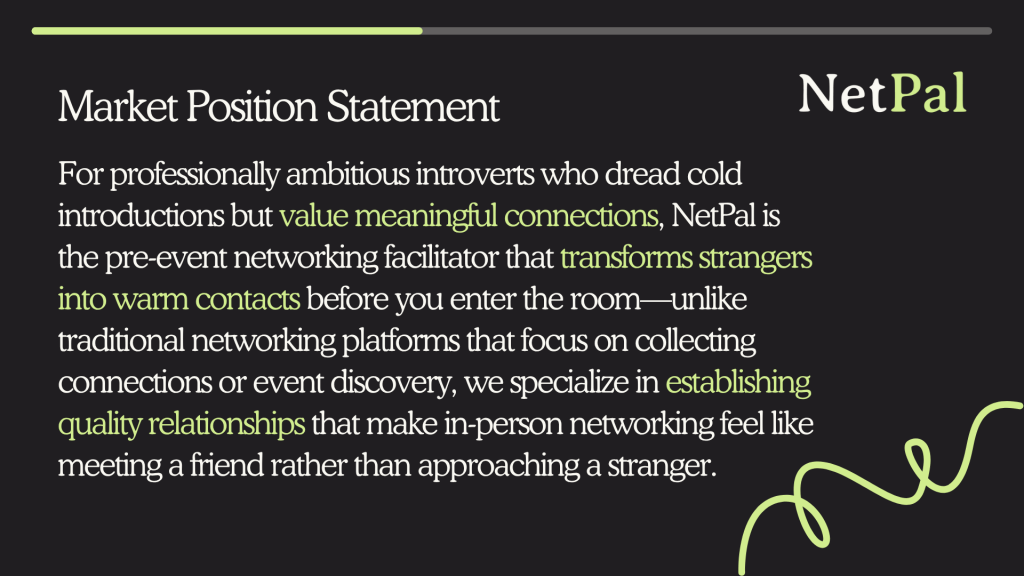
In the design and development stage, a guideline on brand identify and tone of voice were developed to create a suitable market positioning. NetPal aims to provide a thoughful solution to networking without over-promising or being unrealistically enthusiastic.
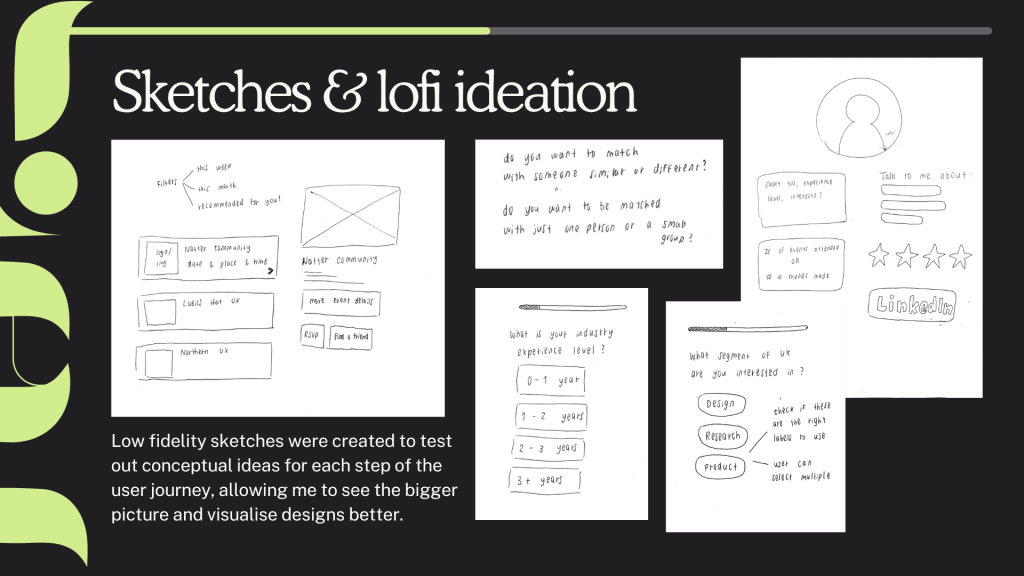
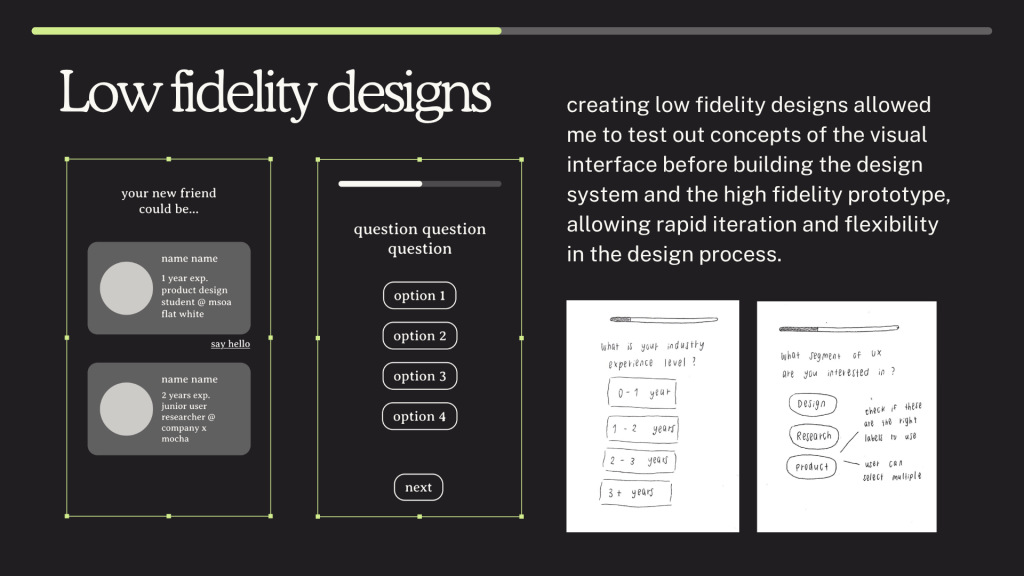
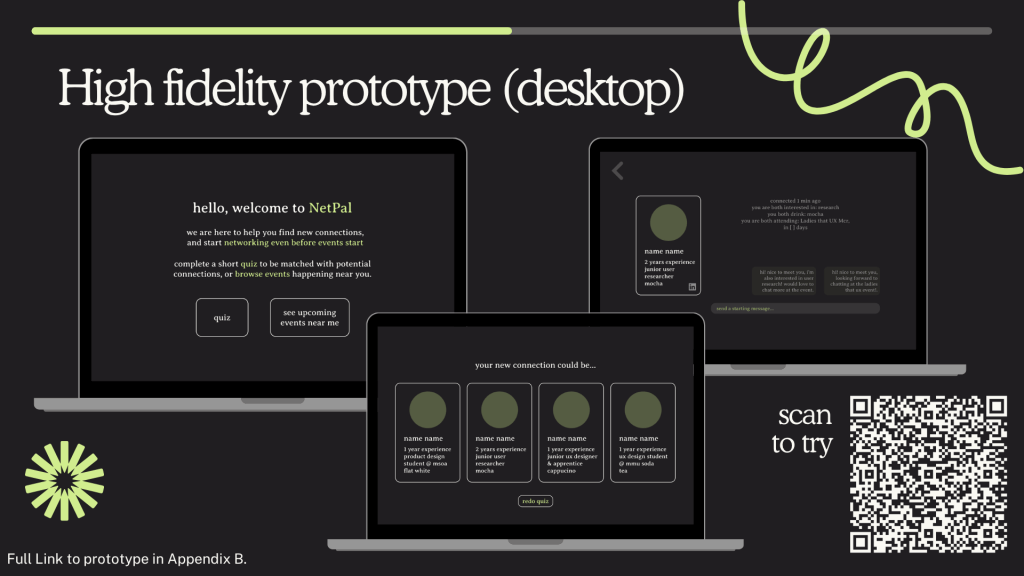
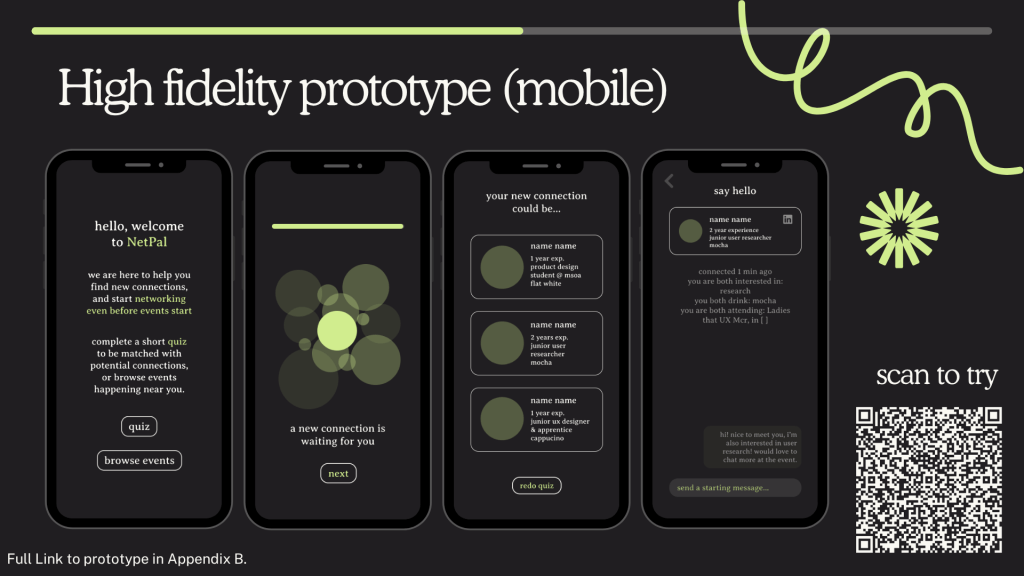
designs were first created in low-fidelity sketches, which were then developed into the first versions of the prototype, in both desktop and mobile interfaces.
Critical Evaluation
Eyetracking + Retrospective Think Aloud (RTA)
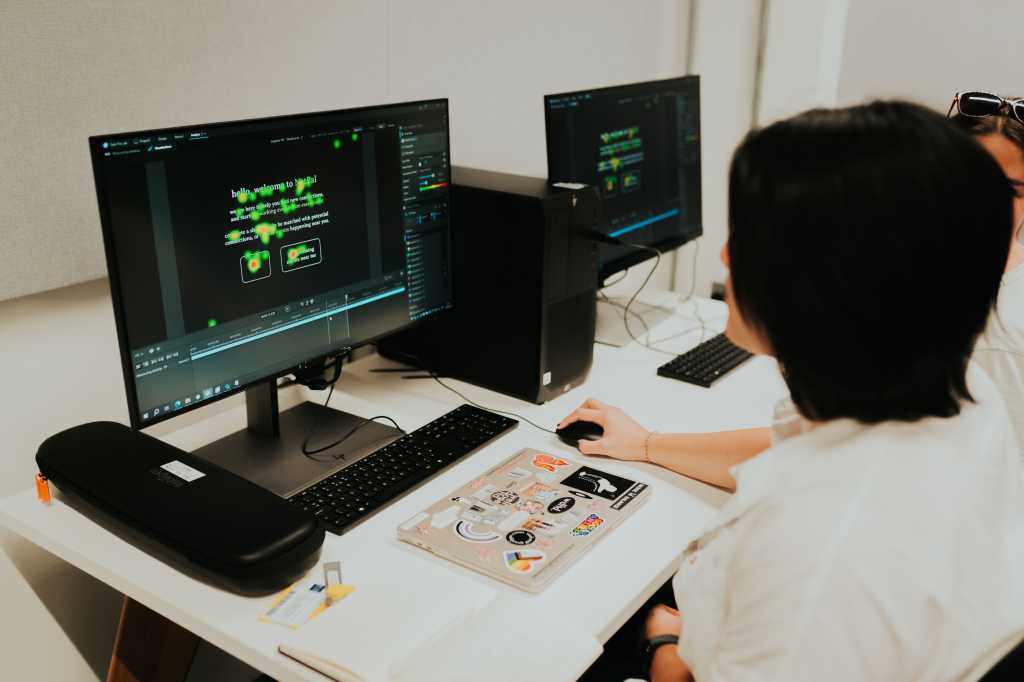
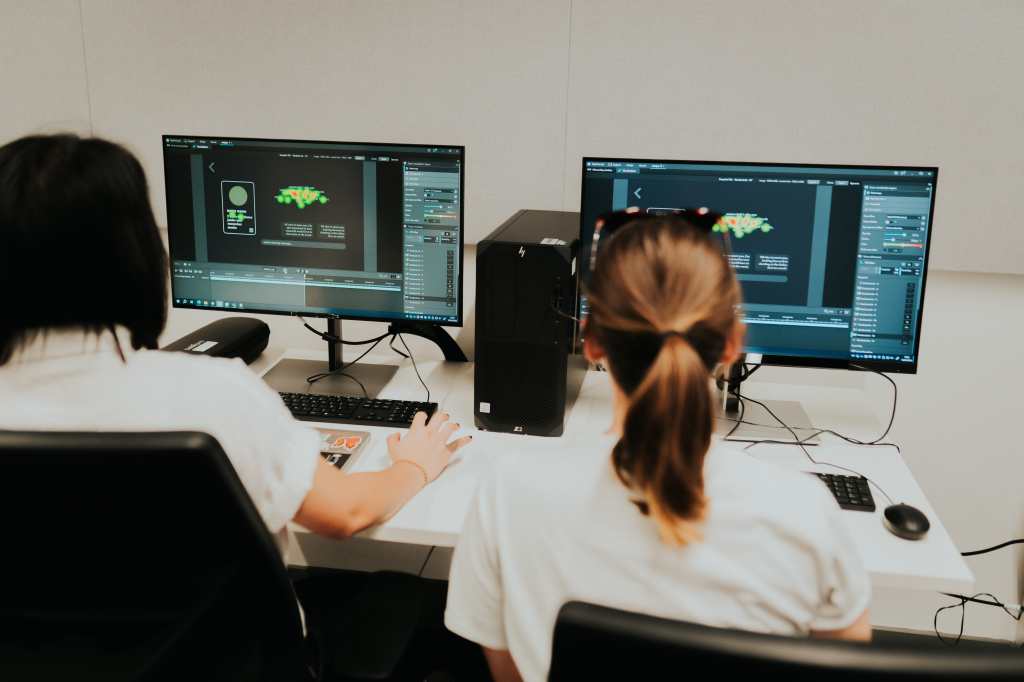
To gather critical feedback from users, a mixed method testing of eyetracking and retrospective think aloud (RTA) were used to learn user behaviour, as well as gain an in-depth understanding of their interaction with the prototype and pain points. The testing allowed me to identify obstacles and target improvement points for the next iteration of the prototype.
Both desktop and mobile prototypes were tested, and users reported preferring the mobile interface due to their needs and the use context of the product
eyetracking visualisation – heatmaps
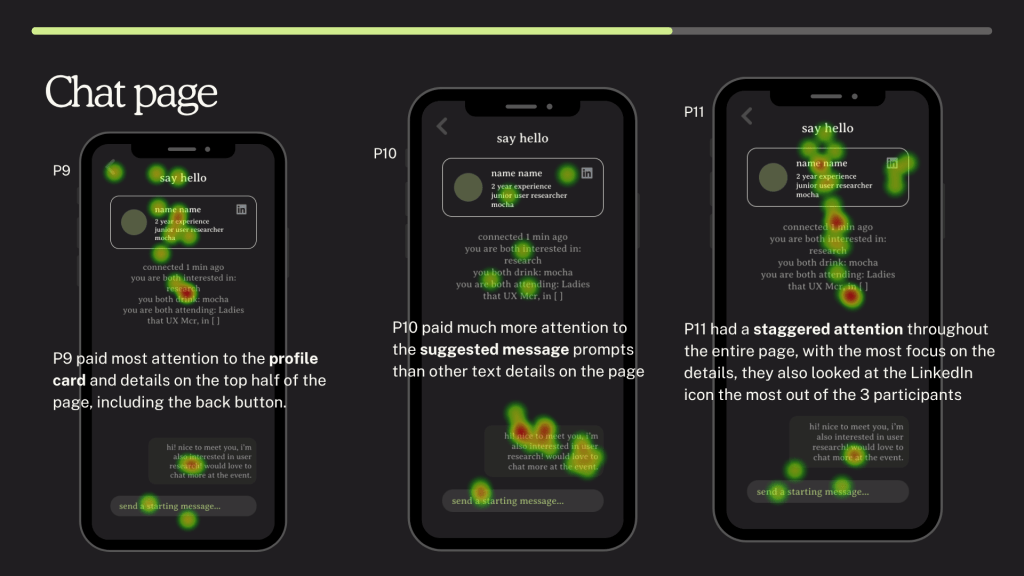
Visualising eyetracking data into heatmaps allowed an intuitive representation of user gaze data, which helped me understand the effectiveness of visual elements and CTAs.
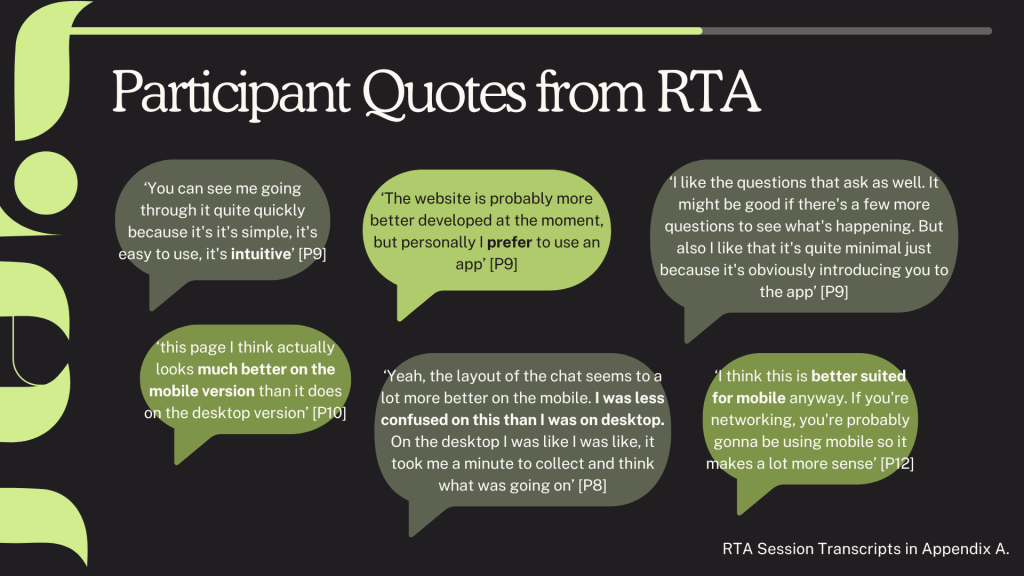
Conducting RTA after the eyetracking testing allowed me to expand and seek reasoning behind certain user behaviour during the session, such as some users spending more time on specific screens or obstacles. User data was used to validate certain designs and identify improvement points in the prototype.
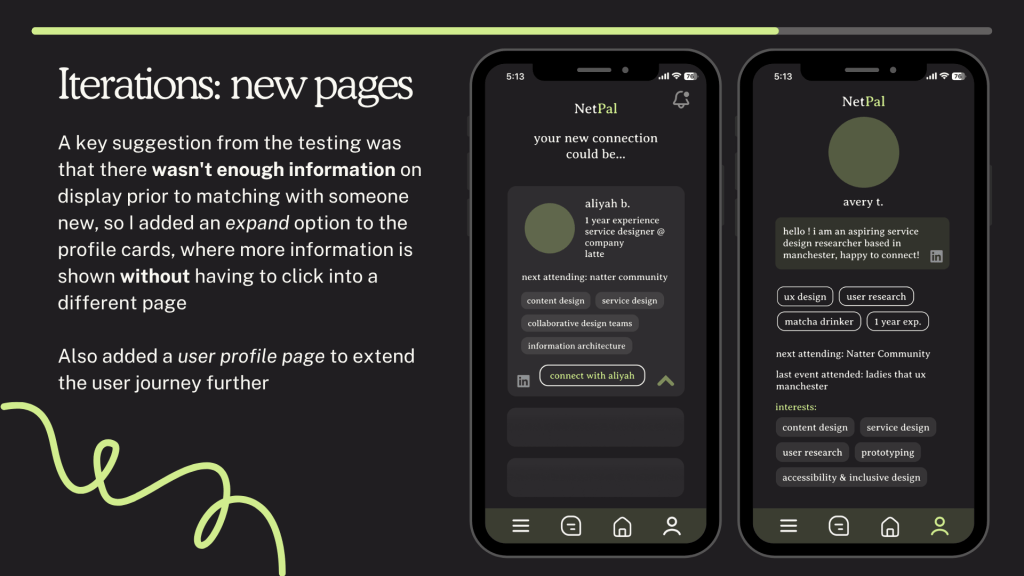
Iterative design process
After the usability testing, results were analysed and improvement points were brought back to iterate the prototype following user feedback.
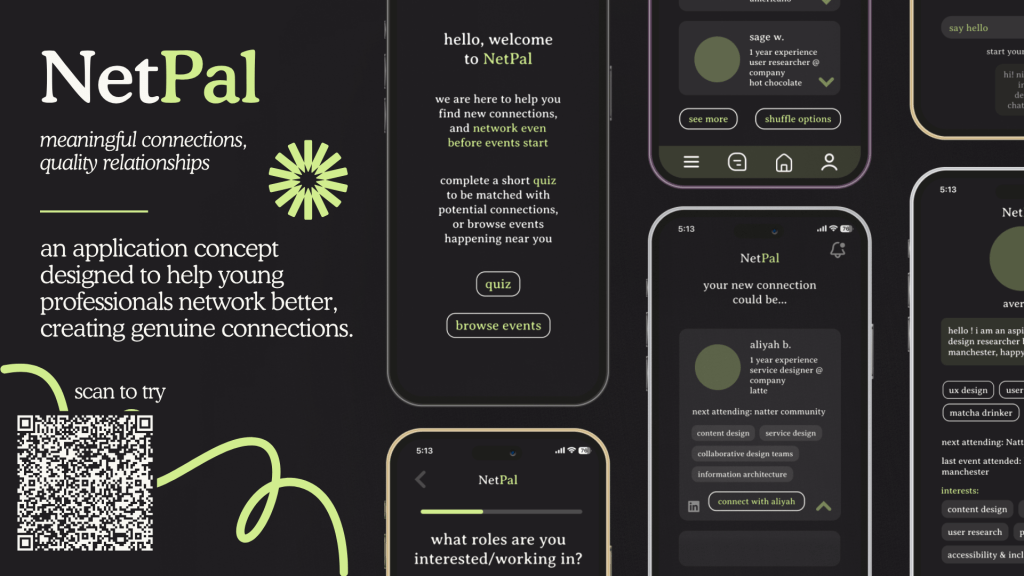
Final Prototype
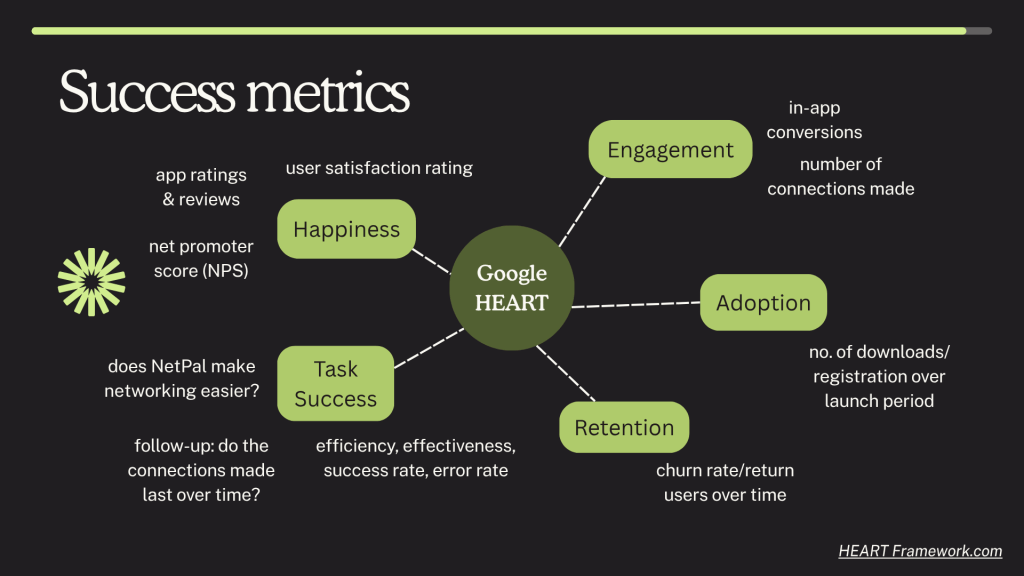
In measuring the success of NetPal, the Google HEART Framework is leveraged to allow a nuanced measurement using both behavioural and attitudinal metrics, with key areas being user satisfaction, engagement and task success.
Recommendations
- Expand prototype user journey to include: event details & registration journey
- Larger-scale usability testing with relevant groups
- integrate other testing methods
- non-controlled natural environment
- Exploring database & event information gathering
Conclusion & Reflection
This project allowed me to conceptualise and develop a product from start to creating a high-fidelity prototype solution, as well as gain critical feedback through mixed methods testing and integrate a continuous iterative design approach. Integrating user testing and reiteration into a limited project timeline forced me to prioritise key features and work more efficiently, which built key skills in organisation and time management.
 mayvira's portfolio