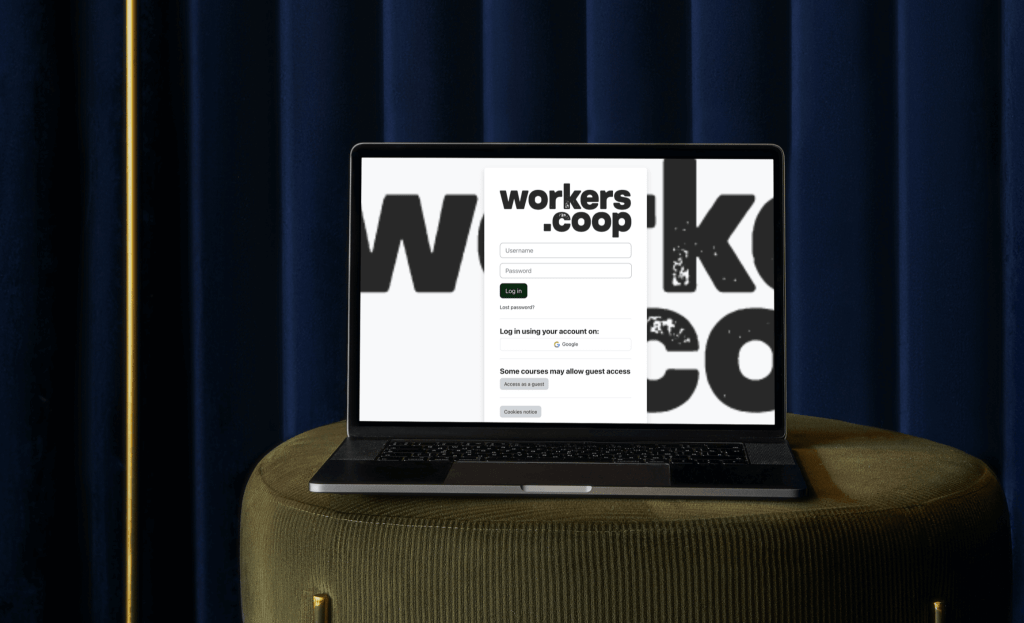
Internship supporting project management
Key skills: UX research, Client liaison, Product Development, Usability testing

User Research
 Personas
MoSCoW
MVP
During my internship at the Preston Digital Foundation, I directly supported the project management of their project with workers.coop; developing an MVP online learning module for members of workers cooperatives.
Background & Context

workers.coop is a federation of workers cooperatives, with the central goal of providing a collective network, resources hub and strengthening co-ops.
Their target audience include cooperatives that want to be part of a larger network, to access development opportunities, training resources and engage with other co-ops in the ecosystem.
Project scoping
The initial meeting was conducted to scope client expectations and project needs.
The client’s main need is to create a new online learning module for co-ops to use in training new workers, educating them mainly on core values and principles of worker cooperatives. This will be to incentivise the workers.coop membership, with access to extra resources, network and training materials.
✸ because the client approached us with a solution already in mind, I co-conducted research to validate real user needs, and ensure that the business goals and user goals align.User Research
Research was conducted through semi-structured focus group sessions with relevant stakeholders.
Through the sessions, I learned more about the stakeholders’ needs and current pain points within their system.
In creating the stakeholder deliverables, I utilised the existing workers.coop styleguide to achieve visual cohesion;

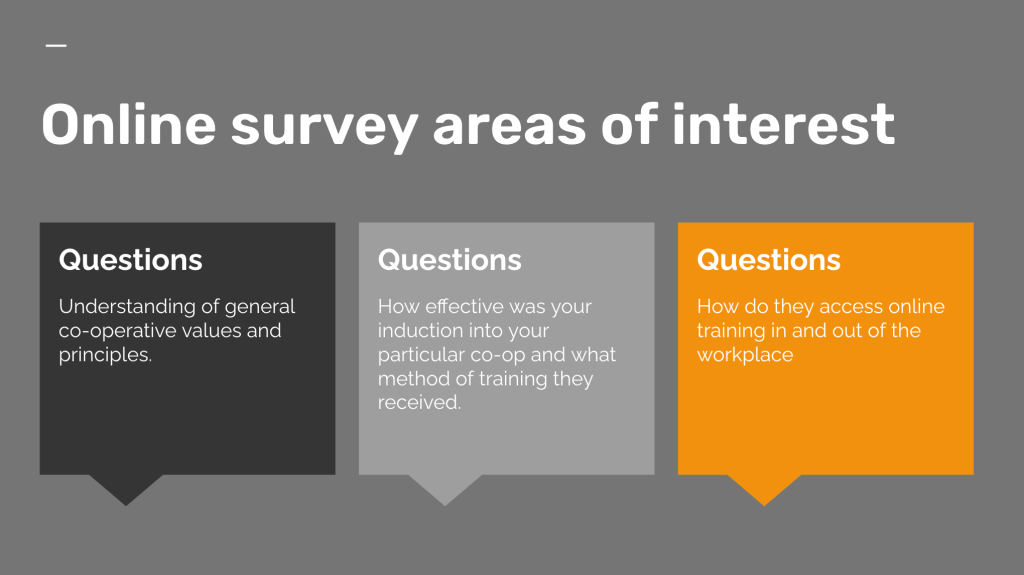
An online survey was also conducted to gain more insights from the wider group of co-op members.
Personas
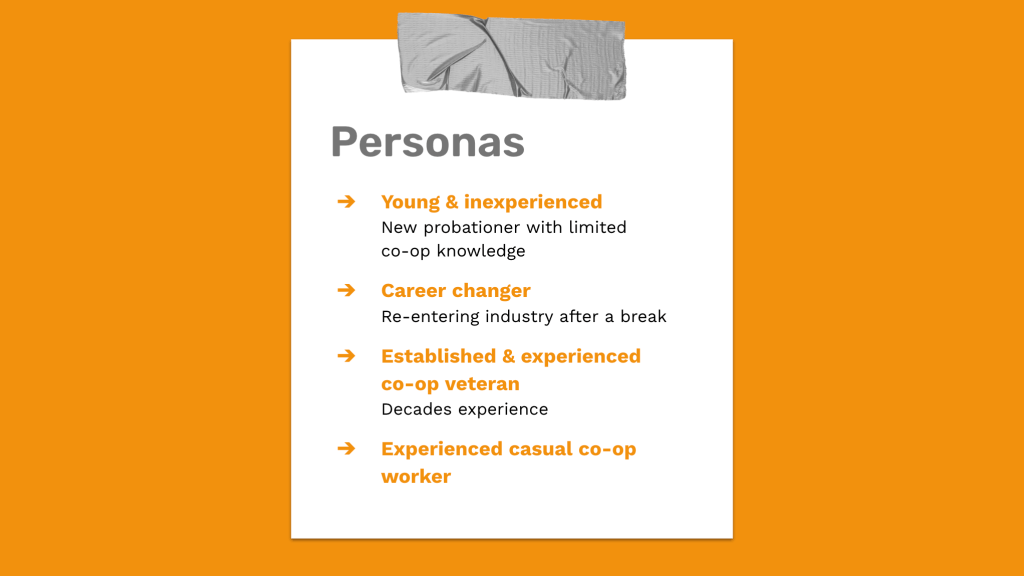
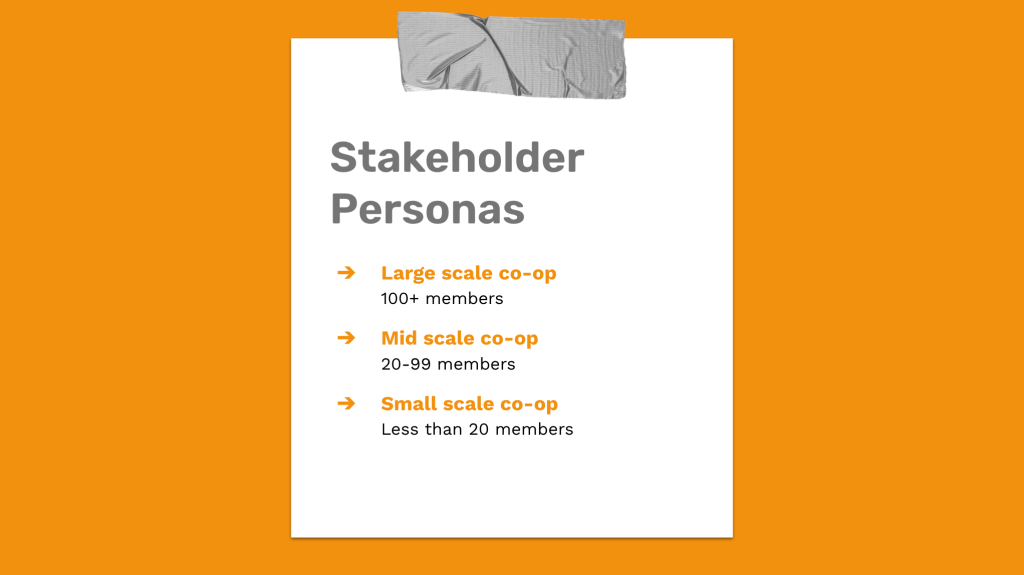
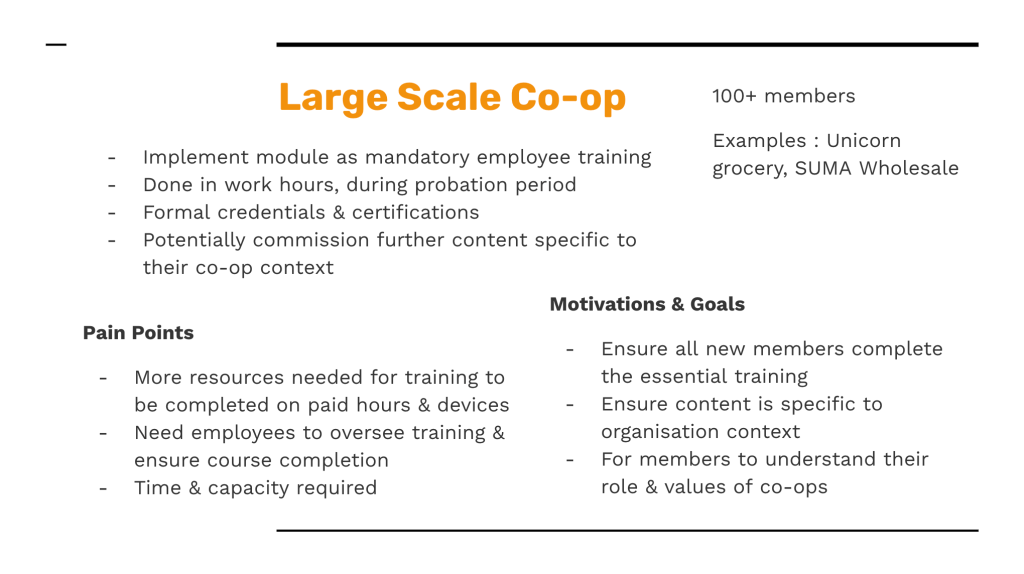
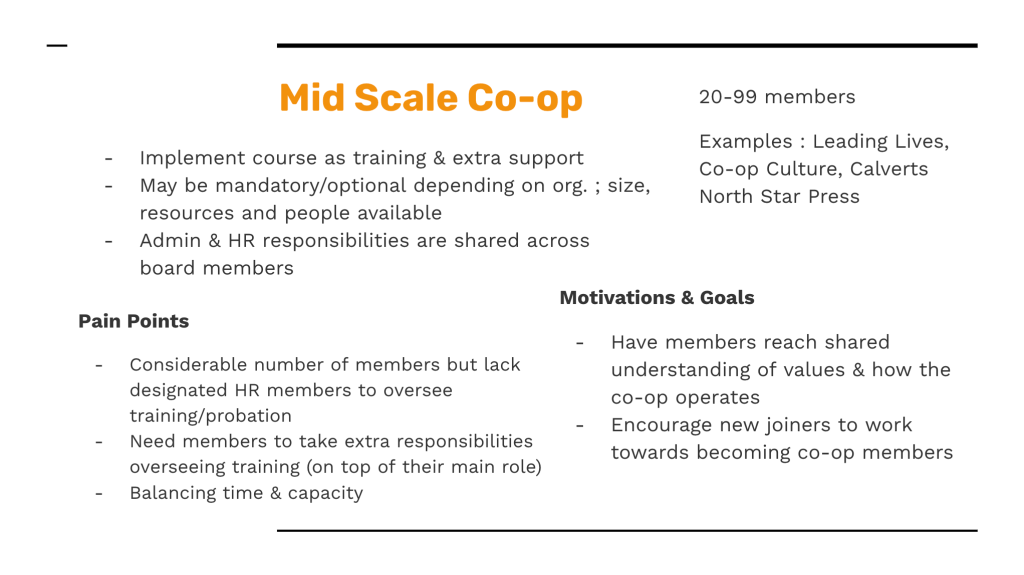
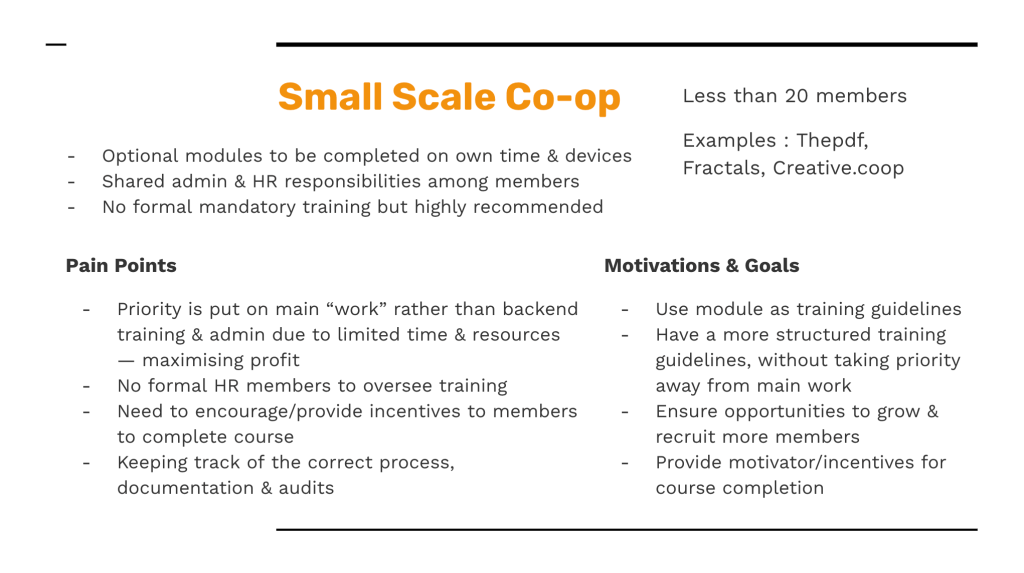
The user sessions gave more insights which I used to create 4 suitable user personas; to accommodate various user segments relevant to the product.
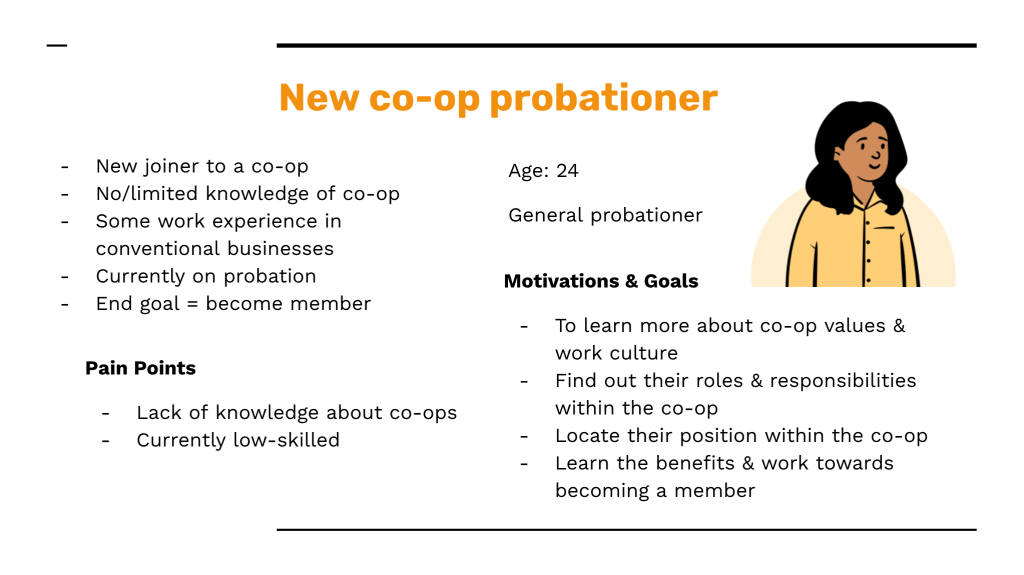
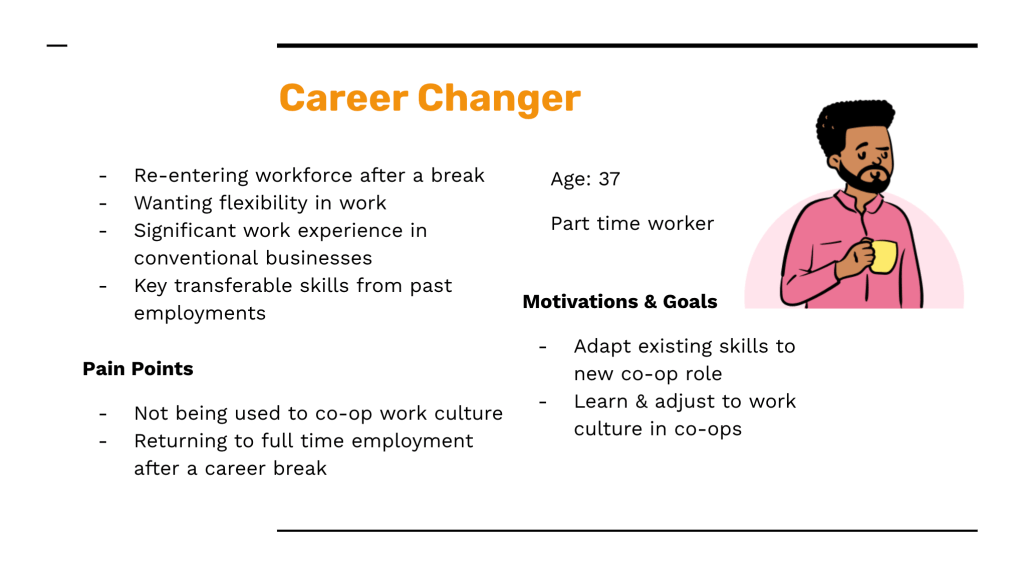
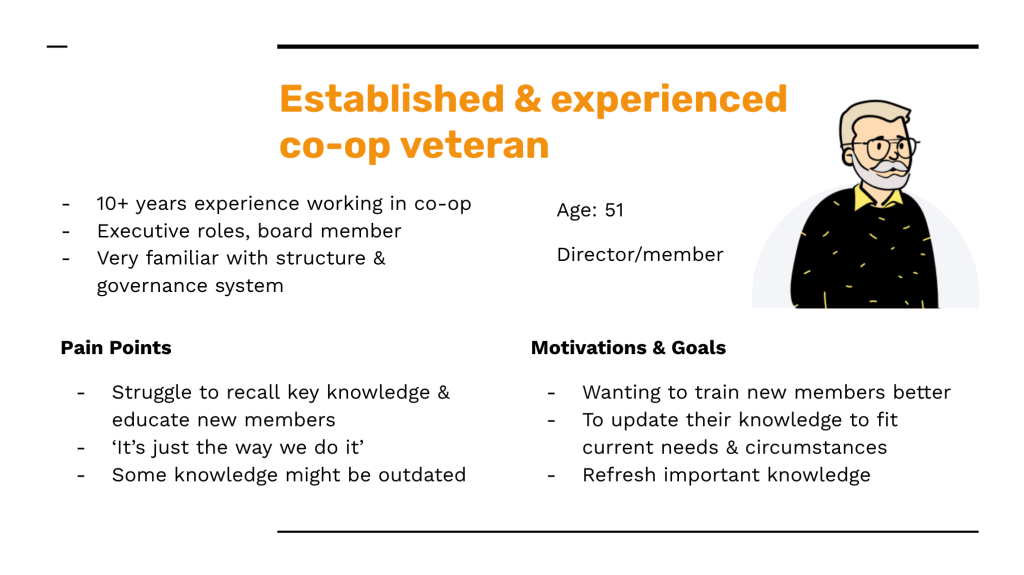
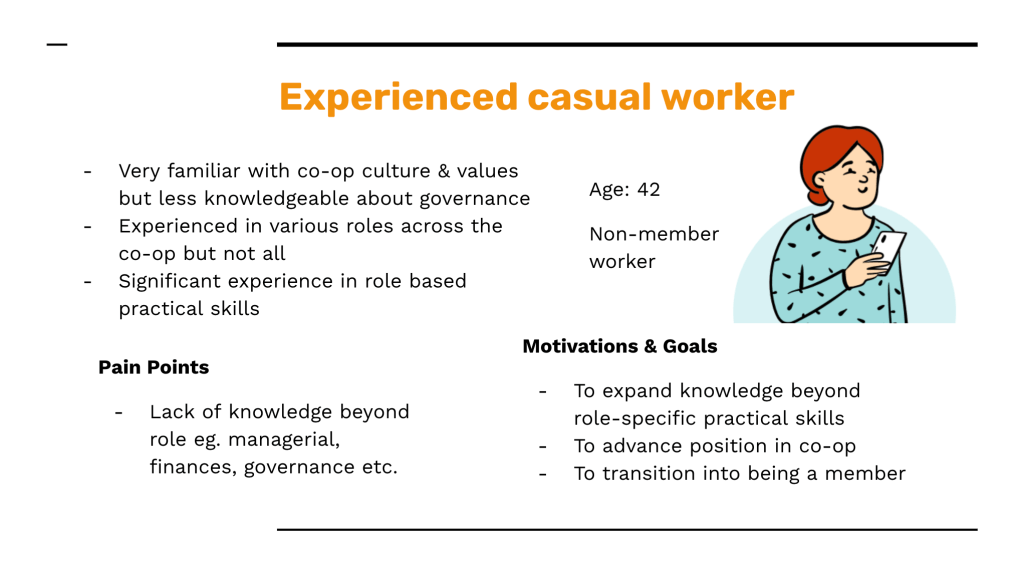
Since the ‘customers’ and ‘end users’ are different groups, I had to consider both of their needs and pain points. Thus stakeholder personas were also created to understand the various models of co-ops, and how the variety in scale can impact their capability and needs for the product.
MoSCoW
Using the MoSCoW prioritisation method, I was able to deliberate key project requirements for the MVP.
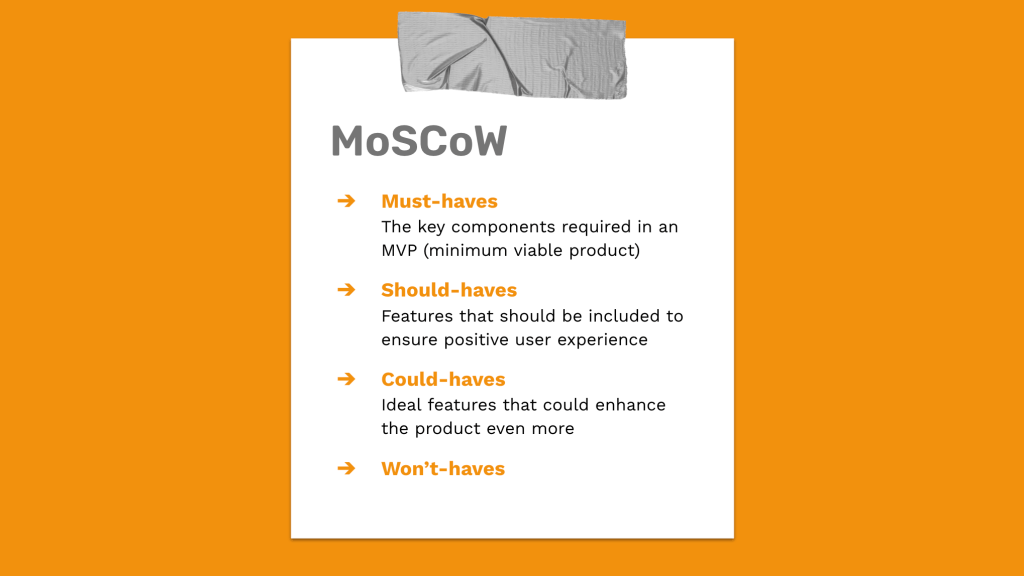
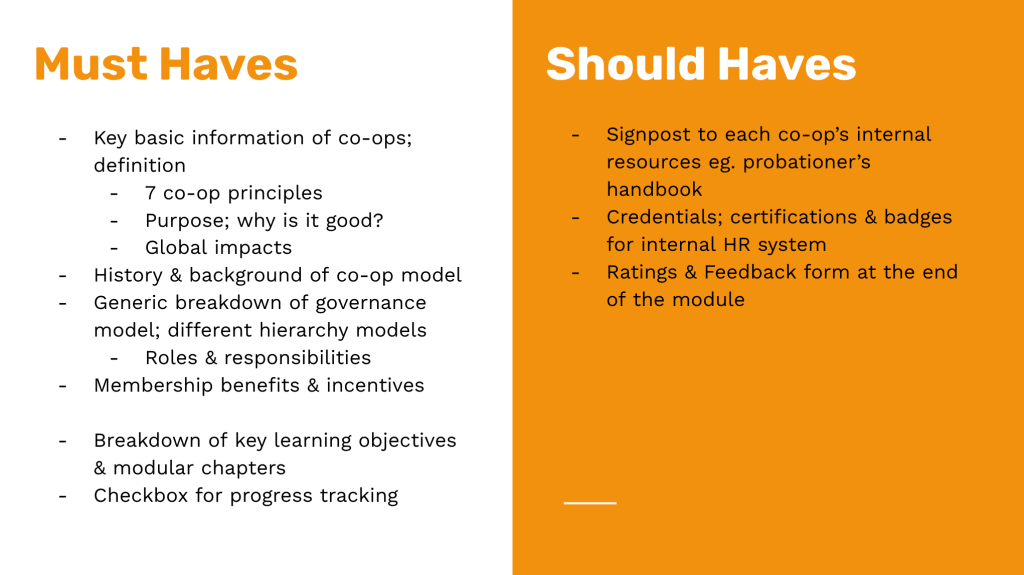
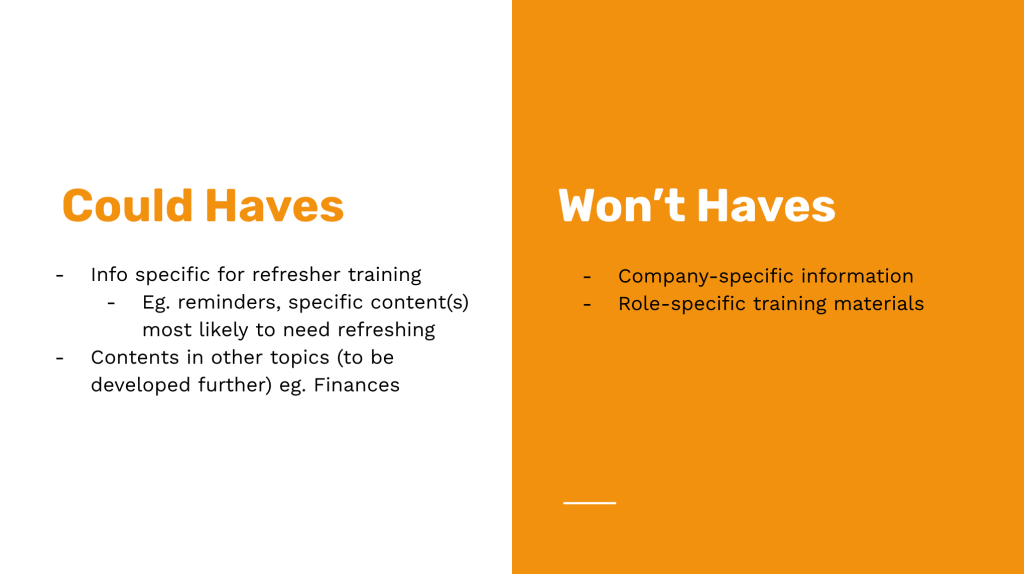
This allowed me to prioritise the key features essential to the MVP, and continue on the product development process. By communicating and updating the stakeholders regularly, I ensured that my work is fulfilling the client’s expectations and on track to a successful outcome.
The work was then handed over to the dev team in developing the MVP.
Product – MVP
The MVP produced is a Moodle module outlining the key principles and values of co-ops, with support resources, checklists and a short quiz at the end. It fulfills the primary client requirements gathered from the MoSCoW analysis.

Usability testing; heuristics evaluation
After the MVP has been developed by the dev team, I conducted a short heuristics evaluation to determine the usability of the product, and whether it fulfills the intended purpose. A Trunk test was also included as part of the testing to ensure the website can be navigated easily by new users.
The test found that the MVP fulfills the core purpose and basic usability, but leaves room for improvement and iteration, such as expanding the course content and adding more interactivity/tasks for the users. My input was then used to feedback into reiteration of the product.
Conclusion & Reflection
The client showed satisfaction with the MVP presented and will continue with implementing this feature onto their website, with potential of commissioning more modules in the future.
This project not only allowed me to apply my academic knowledge (user research, brief development) in a live client project, but pushed me to develop core skills in project management and client liaison, including learning to communicate UX goals and justify design decisions to business stakeholders.
Despite the limited resources, I learned to adapt working under certain conditions and unexpected circumstances, as well as work closely within a small team of designers and developers.
 mayvira's portfolio