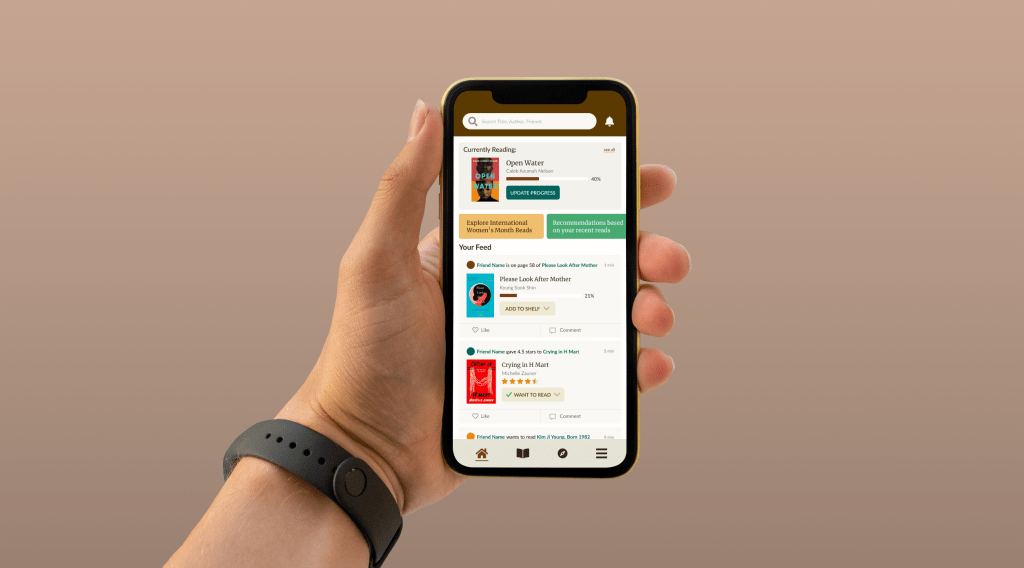
A product redesign project focusing on user research & eyetracking testing, developing a high fidelity prototype.

User Research
Eyetracking testing
goodreads is a book-tracking application and online community, with the world’s largest database and user base. However, the platform is notorious for the negative user experience, having an outdated, user-unfriendly interface and not fulfilling user needs.
As a current user, I saw room for significant improvement in the current product – I focused on the mobile application interface, looking at users tracking their reading progress on the go.
Idea development & initial research


Problems
- overall outdated & clunky interface; does not drive engagement
- unintuitive interface
- inconsistencies between web & app interface features
Goals
- redesign interface to be more aesthetically appealing with better usability
- improve interface to encourage engagement
- drive traffic & user generated content ; benefits platform
First Prototype
After secondary research and ideation, the first prototype was created.

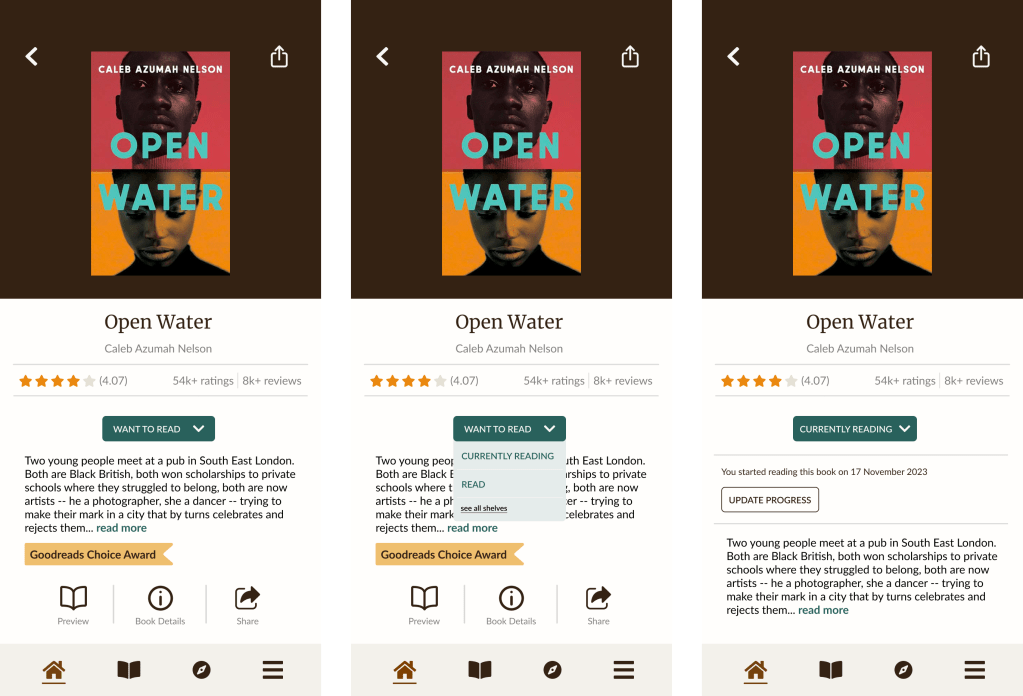
This was then put through user research, to gain feedback and seek improvement points.
User research
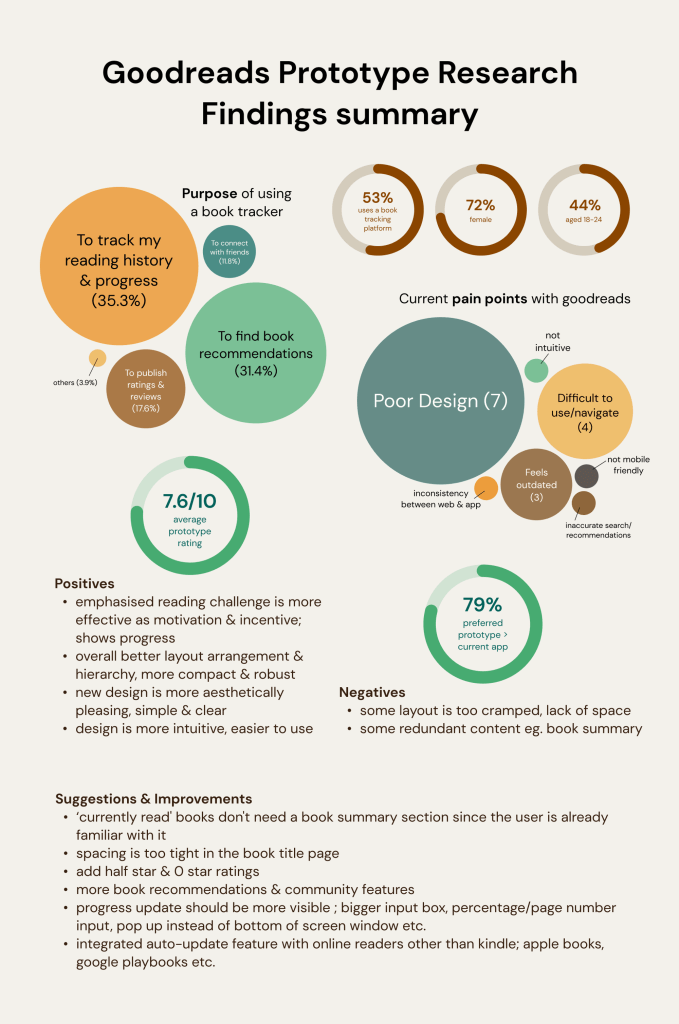
User research was conducted through a combination of survey and focus group, with users from both mainstream, current and non-users groups. The diverse sample group allowed me to gain nuanced feedback and discover hidden user needs and pain points. The findings were then analysed to create design requirements and improvement points for reiteration.
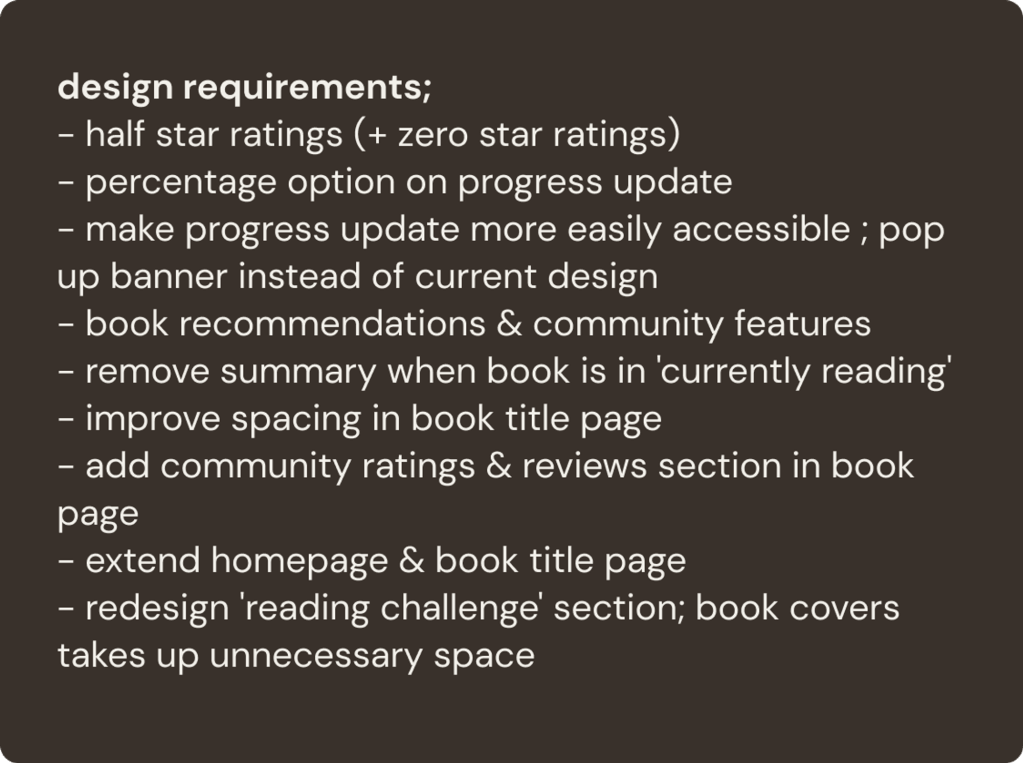
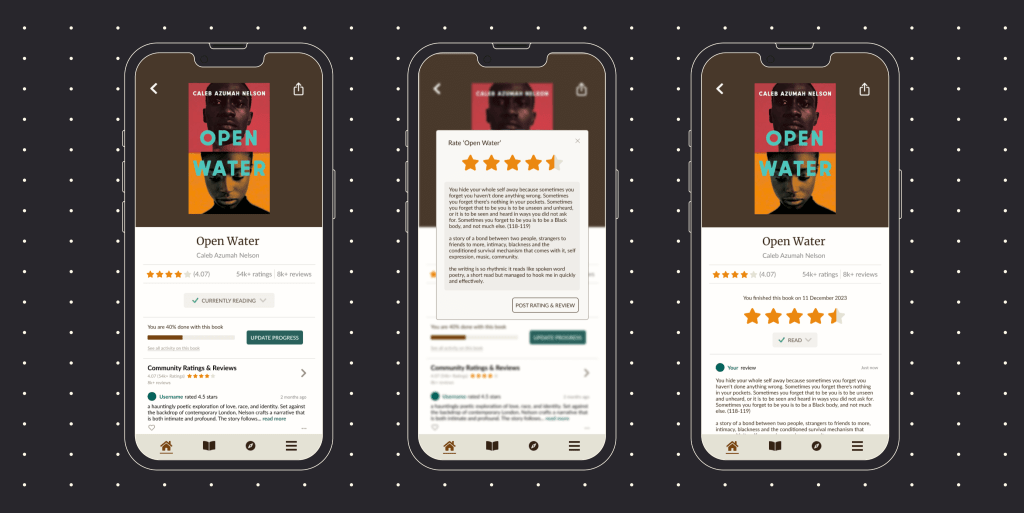
Iterated Prototype
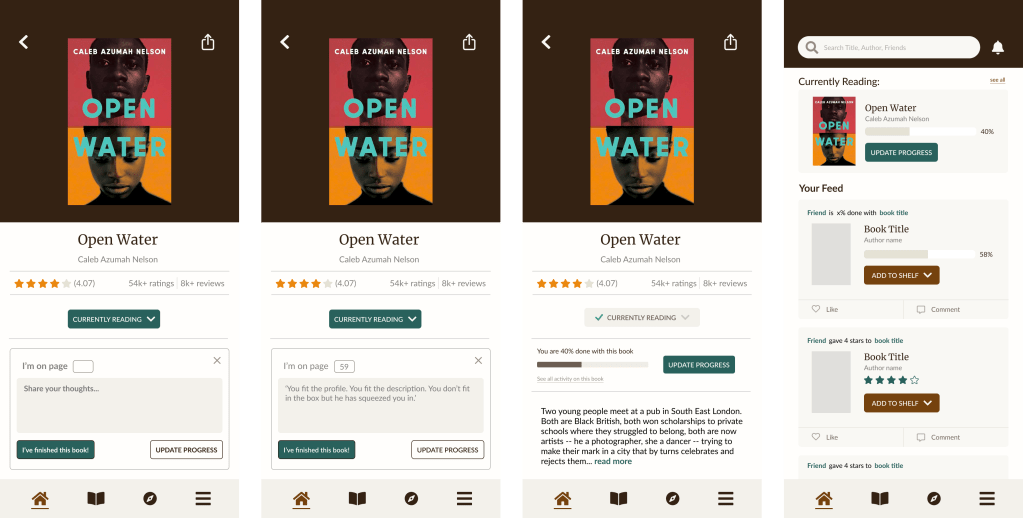
I used the design requirements to iterate and expand the user journey to include ‘rating & reviews’ section after the user finishes a book.
Eye-tracking Testing
Eye-tracking testing was carried out with Tobii eye-tracking equipment, which allowed me to observe the user’s interaction with the product, including their attention points and obstacles.
The testing showed major success in interaction points, with a 100% success rate, despite 75% of the testers were unfamiliar with the goodreads app. Some non-user testers revealed hidden pain points, such as error tolerance, a crucial quality for the learning curve of new users.
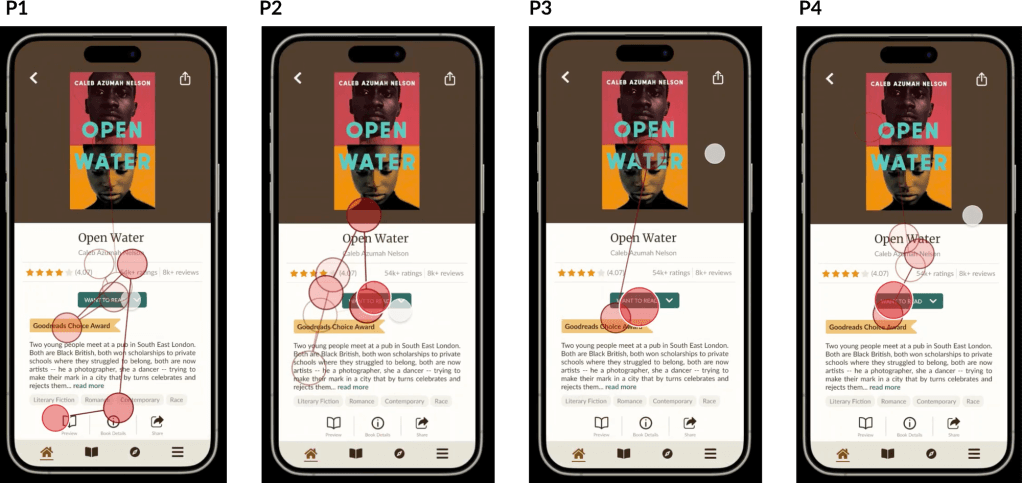
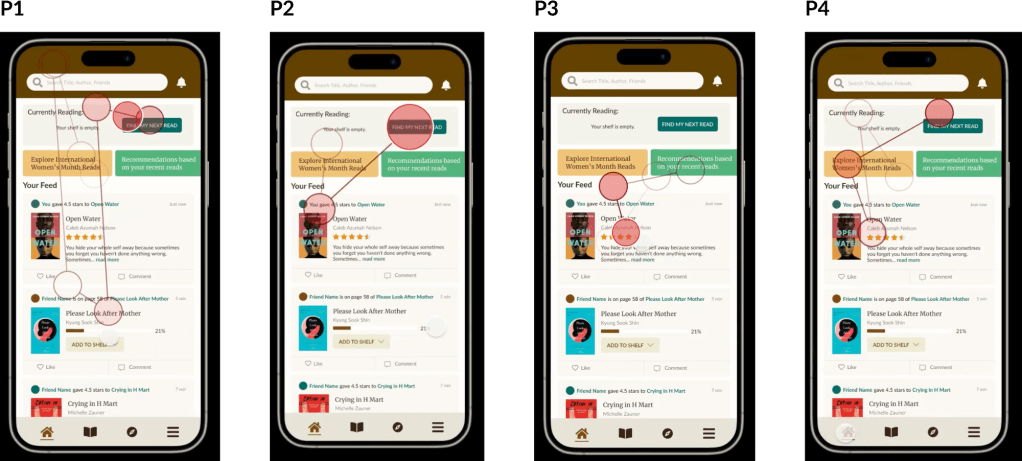
Due to limitations in mobile testing equipment, the prototype was only tested through desktop view, which was not interface-accurate – this could potentially result in unconscious bias and skews in the data. Heatmaps and gaze pattern visualisation were also unavailable due to technical limitations.
Conclusion
This project allowed me to conduct primary user research and testing, which were crucial in gathering key user feedback.
Opportunities for field research and testing enabled a more nuanced feedback contributing to iterations and more effective product development, which can be supported with evidence.
Recommendations
for potential further developments;
- Continue iterating & testing the app with mobile eye-tracking equipment for enhanced accuracy
- Visualise eye-tracking data through heatmaps/gaze patterns for more detailed insights and data analysis
- Conduct think-aloud testing (concurrent or retrospective) alongside to deepen insights
- Test with a wider group of users; gain diverse perspectives and/or hidden user needs
- Expand the redesign to other sections of the application
- Use the suggested improvements and prototype to implement changes to the actual application
- Small-scale beta launch of the new mobile application to a pilot group to gather user feedback
- Create consistency by developing the website alongside the app
 mayvira's portfolio